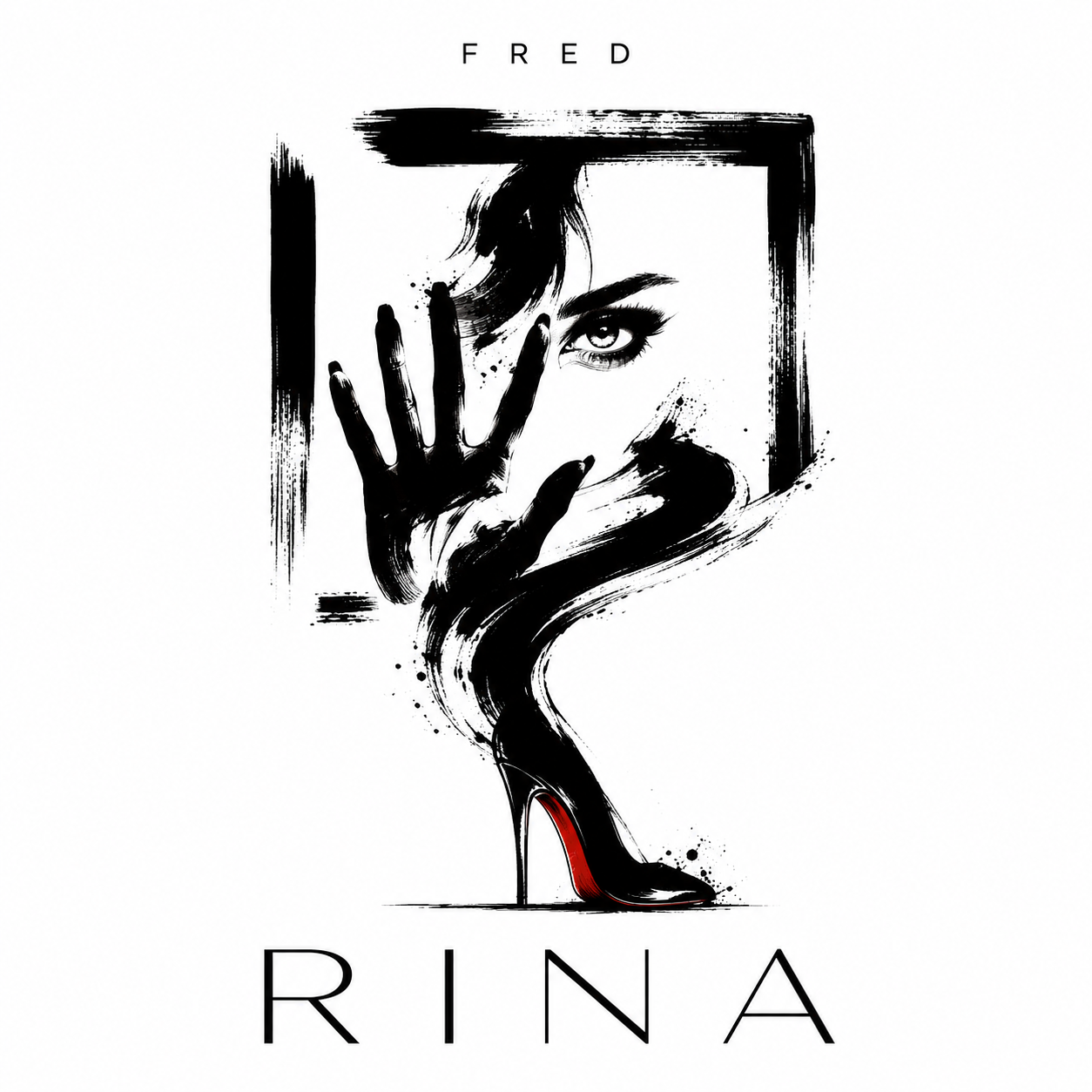
CAMLAND was not born from an idea about the Internet. It was born from an encounter. Before the screens, the tokens, the endless conversations, the fantasies bought by the minute and all the figures that would later inhabit this world, there was Rina. A woman FRED first knew in real life. And that detail changes a great deal, because the screen came later.
Rina worked as a cam model. She could have remained one of those silhouettes people watch without ever really knowing what exists on the other side of the camera. But she was already a person before she became an image. With time and trust, she spoke about her work, its backstage reality, the men behind their usernames, the requests, the words, the behaviour, what viewers think they are showing of themselves and what they sometimes reveal without even noticing.
Most of all, she allowed FRED to see what the public never sees: not only a woman in front of a camera, but the other side of the screen. On some occasions he was present during sessions from the blind spot, off camera. Not as a client, not as part of the scene, simply there, observing what actually happened when the camera switched on. That shift in perspective became essential: in front of the screen, the viewer thinks he is watching; behind it, someone is watching him too, reading his messages, waiting, sometimes absorbing what is sent her way, playing a role, protecting herself from it, laughing at it, or simply trying to get through a few more hours.
CAMLAND gradually grew from that discovery. Not as an indictment of men, not as an idealisation of women who work on webcams, and certainly not as a moral lesson about sexuality. CAMLAND is interested in what happens when desire meets the screen and the screen turns people into roles: the one who pays, the one being watched, the one who asks, the one who answers. And somewhere behind those roles, two people who nevertheless remain human.
The song Rina is therefore not a literal account of the real woman. It transforms her. In the song, Rina becomes almost a stage creature: magnetic, dangerous, sure of her power. The balance of power reverses. The man who thought he had come to watch discovers that he may be the one caught in the trap. The woman on the screen stops being merely the object of desire. She looks back, she knows, she controls the scene, and the man who believed himself to be the spectator becomes the one being observed.
It is deliberately larger, darker and more theatrical than reality, because a song is not a report. It takes something true and shifts it until another truth appears. Yet behind this Rina of light, vertigo and power, the first Rina remains: the woman met before the screen, the woman through whom an entire world could begin to take shape.
A few traces of that story will remain elsewhere. An object, for example: a black shoe with a red sole. It appears here. It will appear again, not necessarily with the same meaning. In FRED, certain details like to travel. And perhaps one day, by connecting enough songs, images and worlds, it becomes clear that some stories never really stopped answering one another.