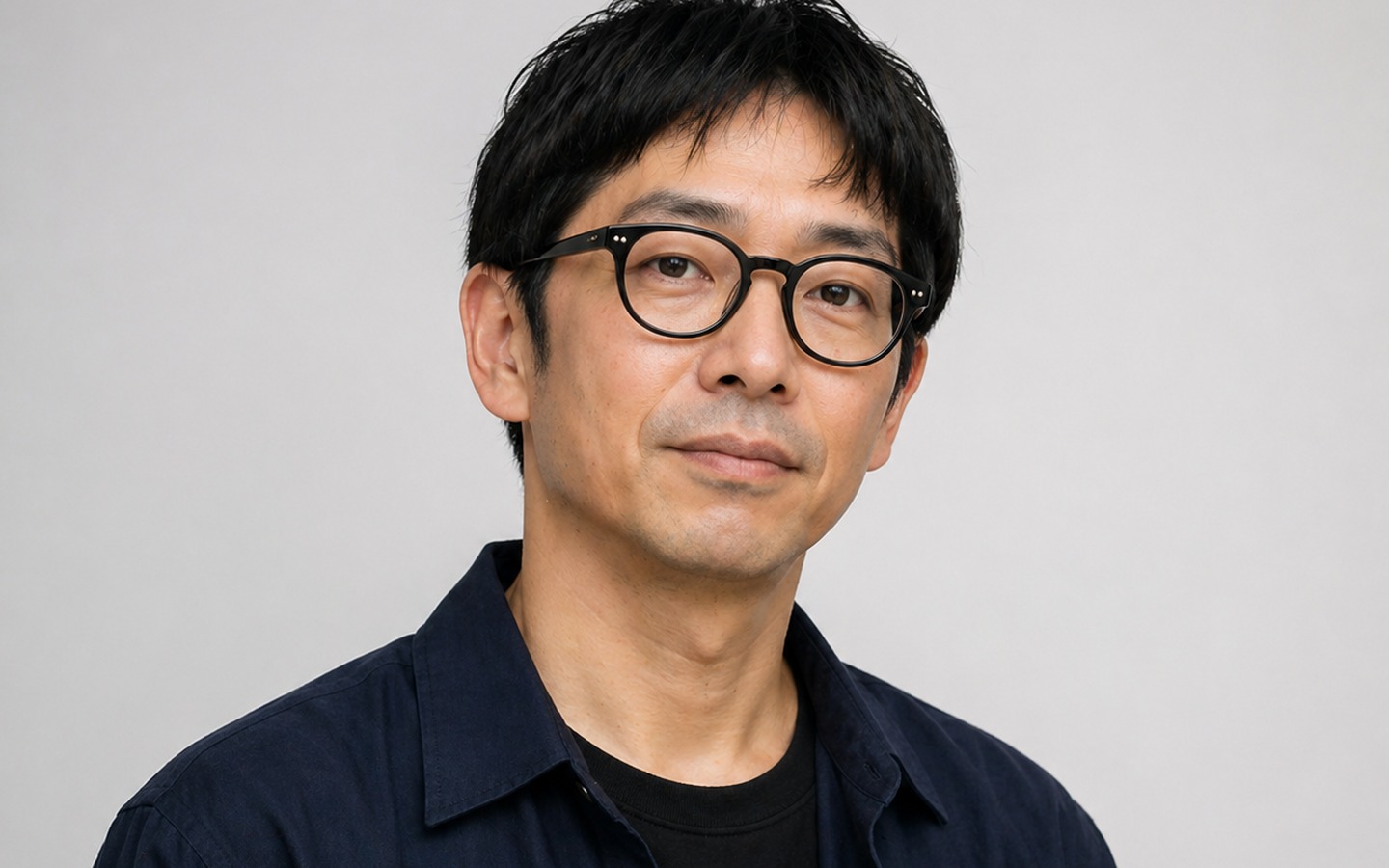
For this new Crossed Perspectives piece, I’m the one speaking. Not to write an official portrait of Daichi, but to explain what he represents inside the FRED workshop: an ear, a standard, a quiet presence in service of the right sound.
What people usually see is the visible part of a song: the words, the voice, the images, the artwork, the track once it finally reaches the public. Before that, there is a whole workshop. Tests. Listening sessions. Versions we keep and versions we let go. Songs that almost stand on their own, but not quite yet.
I come to music through words first. I circle around a sentence, an image, a memory, a wound, anger or light. FRED grew out of that: words, voice, memory, the human being behind it all.
But a song does not hold together simply because the words are right. The voice has to find its place. The music must not swallow the words. The sound has to carry emotion without disguising it. The track has to breathe.
That is where Daichi matters to me. Daichi is FRED’s sound engineer, but I do not see him as a purely technical function. He represents another way of listening: hearing when something spills over, when a production becomes too clean, too heavy or too bright, or when the fragility of a voice needs more room instead.
In FRED, sound is not decoration added at the end. It is part of the writing. A poor balance can betray a lyric. An oversized mix can bury a voice. One effect too many can turn emotion into scenery.
FRED moves through very different sonic materials. A track can be confrontational, nocturnal, fragile, ironic, tender or luminous. The worlds change, and so do the musical colours. The question remains the same: does the song truly say what it is meant to say?
Not the perfect sound. The right sound.
That may be what Daichi represents most clearly to me: the right place for the voice, the right tension, the right silence. Not a sound calibrated to fit a box, but a sound that respects the song.
There is something very humble about this work. When it is done well, you do not necessarily notice it. You simply listen. You enter the track. You do not think about the space around a voice, a breath that was left intact, or something deliberately held back. And yet that is often where everything happens.
Between the birth of a text and the moment a song can be shared, there is a long passage. The text becomes a voice. The voice meets music. The track gains weight, and sometimes some of that weight has to be removed. Cut. Rework. Lighten. Densify. Let it breathe.
To me, Daichi stands on that threshold: between raw emotion and a finished sound that can be passed on without losing what it carried at the start.
I believe in these quiet presences inside a creative workshop. They do not try to take the song’s place; they help it find its own.
Daichi is not here to make FRED smoother. He is here to help FRED sound right. And perhaps that is one of the most important things in this project: not losing the human being along the way.